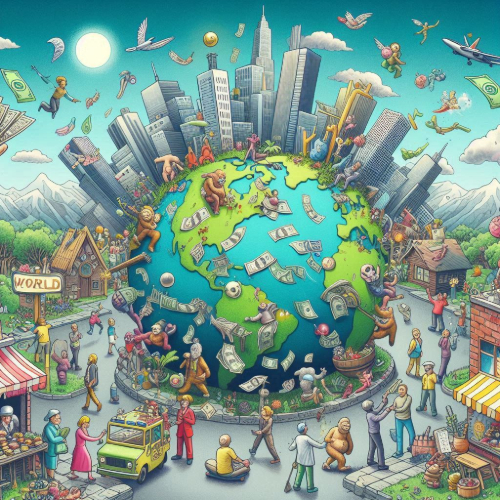
There comes a moment in every society—a playful epiphany—when we realize that money, that overly literal measure of our worth, is nothing more than a glorified piece of paper (or a set of digital digits) that has outlived its usefulness. Imagine a world where your value isn’t determined by the number of zeros in your bank account but by the quality of your morning coffee, the kindness of your smile, or even the creative flair you bring to your community projects. The idea of eliminating money might sound revolutionary—and, admittedly, a bit bonkers—but beneath the surface lies a rationale as compelling as it is hidden.
The Great Money Mirage
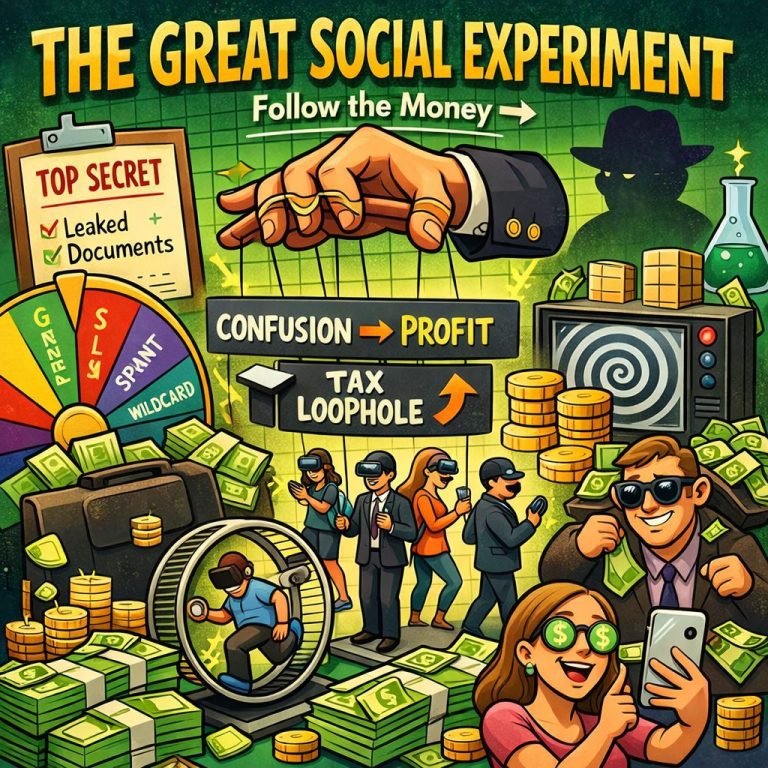
For centuries, money has masqueraded as the universal solution to economic organization while concealing its true purpose: a tool designed more for maintaining social stratification than for nurturing genuine human connection. Hidden away in the dusty archives of economic folklore are secret documents suggesting that early economists—and perhaps a few mischievous intellectuals—crafted money not as a means to measure true value but as a neat trick to distract us from our latent capacity for communal creativity. Consider this: what if the relentless hustle for more currency is simply a distraction from real innovation and community spirit? With money off the table, every individual would have the freedom to invest time and energy in pursuits that genuinely enrich society, rather than chasing an ever-elusive financial trophy.
Hidden Facts That Will Change Your View of Currency
- The Origins of Monetary Mischief: Deep in the vaults of obscure historical records, there exist references to secret gatherings of scholars in the 18th century. In hushed tones (and using absurdly oversized quills), they debated the merits of replacing coinage with tokens of merit—the precursor to today’s “credit scores,” but with far more honesty and whimsy. These whispered tales suggest that money was intended as a temporary fix, not as the backbone of modern society.
- The Invisible Ledger of Kindness: Recent (and admittedly underground) studies by a cohort of renegade economists have purportedly uncovered evidence of what they call the “Invisible Ledger.” Unlike conventional accounting, this ledger tracks acts of kindness, creativity, and community service. In societies where informal resource sharing flourished, happiness and productivity soared—proving that real value comes from contribution, not consumption.
- The Currency of Creativity: Hidden among the musings of visionaries is the notion that every human being carries an intrinsic “currency” of creativity and goodwill. When measured by shared community milestones and collaborative endeavors, this intangible wealth surpasses the measly clink of coins. In such systems, success isn’t quantified by bank balances but by contributions to cultural and social enrichment—a metric no central bank could ever hope to replicate.
How to Fix It: A Blueprint for a Currency-Free Future
- Initiate a Gradual Phase-Out: Start by eliminating physical money—coins and paper notes—while simultaneously establishing a parallel system based on community credits. For instance, imagine daily “good deed points” earned by engaging in community service, creativity, or ecological stewardship. These points aren’t meant to replace passion—they’re the manifest evidence of a society that values compassion and ingenuity over profit margins.
- Adopt a Resource-Based Economy: Replace the antiquated model of supply and demand with a more holistic system that allocates resources based on genuine human need and contribution. Picture community databases that track available resources, paired with a transparent system of trust and reputation. In this new paradigm, everyone contributes to a shared pool of creativity and labor, ensuring that energy and resources are distributed equitably.
- Modernize Social Metrics: Transition the economic focus from hoarding currency to nurturing social capital. By integrating digital platforms that assess real-world interactions and communal involvement, society can reward the intangible qualities—empathy, innovation, and collaboration—that are the true lifeblood of progress. These platforms would serve not as surveillance tools but as dynamic, community-driven rating systems that celebrate human potential.
- Celebrate the Transition with Public Art and Rituals: The elimination of money doesn’t signal the end of exchange but the beginning of a new cultural renaissance. Public murals, festivals, and performances could commemorate the old system with a wink and a nod while heralding the dawn of a more interconnected, supportive society. In these celebrations, the cold calculations of finance give way to the warmth of collective creativity.
A Playful Prescription for a Brighter Future
The satire in this proposal isn’t merely for laughs—it’s a thoughtful critique of the outdated structures that govern our lives. Money, in its current form, reduces the complexity of human existence to a single number on a screen. By eliminating it, we invite a paradigm shift where every person is valued for more than what they can amass. With hidden facts that challenge the very origins of our financial obsession and a clear roadmap for transitioning to a system based on trust, creativity, and community, we can fix a system that, frankly, has had its day in the sun.
After all, isn’t it time we embraced a currency of genuine worth—a system where the coin of the realm is not minted in profit margins, but in shared humanity and collective joy?
About the Author

 Daniel L

 Jaime
Jaime