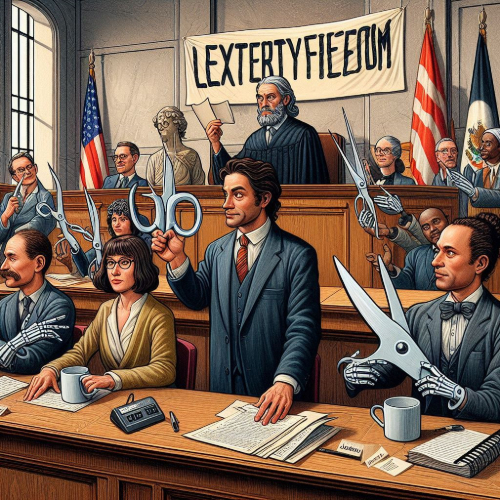
The National Coalition for Left-Handed Liberation (NCLL) has dramatically escalated its lawsuit against American schools, adopting a legal strategy so audacious that even reality struggles to keep up.
At the core of their argument is a groundbreaking claim: the forced right-handed conversion of students constitutes a crime against creativity, stifling the artistic genius of generations. Coalition lawyers argue that suppressing left-handedness robbed society of untold masterpieces—paintings never painted, symphonies never composed, novels never written—all because students were forced to conform to outdated right-handed norms.
To support their case, the coalition has introduced a new legal doctrine: The Da Vinci Principle, which argues that history’s most brilliant minds—Leonardo da Vinci, Nikola Tesla, Jimi Hendrix—were all left-handed, and forced right-handed conversion robbed the world of potential visionaries. Their expert witnesses include a left-handed architect who designs only asymmetrical buildings, a left-handed poet whose verse is written in palindromes, and an ambidextrous street artist who can graffiti protest slogans with both hands simultaneously.
Among the demands listed in their lawsuit:
- Mandatory left-handed creativity studies in all schools, teaching students about the suppressed brilliance of left-handers throughout history.
- A federal ban on right-handed tools, forcing all students to struggle the way lefties have for decades.
- Compensatory damages paid in left-handed calligraphy, ensuring that only left-handed individuals can cash reparations checks.
- A formal recognition of “right-handed creativity suppression” as a cultural crime.
- A full presidential apology, preferably delivered through interpretive dance choreographed by a left-handed artist.
Coalition attorneys have deployed every obscure legal precedent imaginable, citing medieval witch trials against left-handers, misinterpretations of the Bill of Rights that supposedly protect “dexterity freedom,” and filing motions written entirely in backwards cursive—known only to lefties and cryptographers.
“If forced right-handedness hadn’t crushed our artistic spirits, we could’ve had another Picasso, another Mozart, another Einstein—but instead we got kids struggling with right-handed scissors and ink-stained palms,” said chief litigator Sinistra Fairgrip. “It’s time the government atones for the lost potential of left-handed brilliance.”
Legal scholars remain baffled. While some acknowledge that left-handers do tend to be more creative, few believe a court will take seriously claims of “historically suppressed artistic expression.” Meanwhile, right-handed Americans are growing nervous, worried they’ll be forced to fund lefty reparations checks and reparative ambidexterity training.
As the lawsuit plays out, one thing is clear—left-handers are done being underestimated. The world will soon learn that creativity flows best through a left-handed grip.
About the Author


 Daniel L

 Kelly
Kelly