Scientists Confirm Sky Now Contains 14% Plastic; Nation Celebrates With Balloon Release
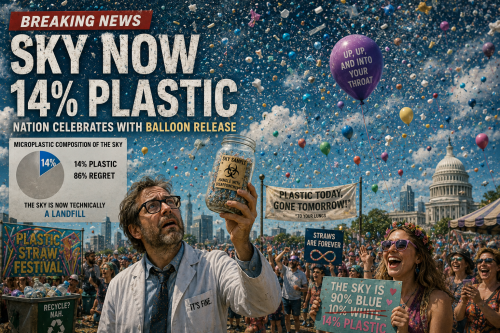
Environmental researchers revealed this week that the sky — the big blue thing we all stare at when pretending to think — is now composed of roughly 14% microplastic particles. This discovery was made after scientists noticed that the air tasted “a little more like a pool float than usual.”
The report, which was quietly published and immediately ignored, states that microplastics are now falling from the sky in what experts are calling “plastic precipitation,” “synthetic snowfall,” and “the world’s saddest confetti.”
Despite the alarming implications, the nation responded with its usual level of enthusiasm: none whatsoever. In fact, several cities celebrated the announcement with balloon releases, plastic straw festivals, and one community event titled “Bring Your Own Bag (Because It’s Already In The Air).”
Environmental groups attempted to raise awareness, but their press conference was overshadowed by a viral video of a raccoon stealing a sandwich, which scientists later confirmed also contained microplastics.
“We’re witnessing a historic moment,” said Dr. Lila Haversham, lead researcher and reluctant optimist. “The sky is now technically a landfill. On the bright side, this means recycling is finally everywhere, including inside your lungs.”
The study warns that microplastic levels could reach 20% by next year, at which point the sky will officially qualify as a synthetic material. Manufacturers have already expressed interest in licensing it.
Meanwhile, citizens are encouraged to reduce plastic use, though most have opted for the more popular strategy of shrugging loudly and continuing to drink from single-use bottles shaped like cartoon animals.
As for the future, scientists say they’re working on solutions, including a fungus that eats plastic, a vacuum drone that inhales airborne debris, and a polite email asking corporations to stop making everything out of the stuff.
None are expected to work.
About the Author

 Jaime
Jaime 
 Daniel L