BREAKING: America Bans Cartoon Tigers From Selling Cereal But Lets Drug Ads Sell You Diseases
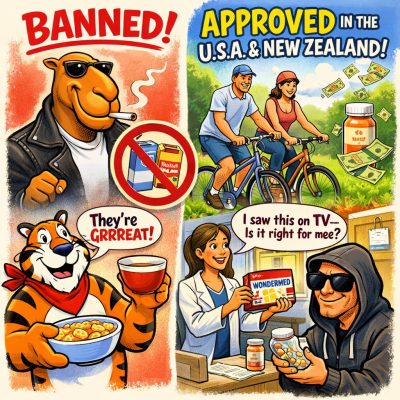
A satire investigation into the only country where a cartoon can’t say “They’re grrreat!” but a pharmaceutical ad can legally whisper “Ask your doctor if you’re dying.”
America’s New Logic: Cartoons Are Dangerous, But Drug Ads Are Totally Fine
Once upon a time, the U.S. government bravely stood up and said:
“No more cartoon mascots selling cigarettes to kids.”
A reasonable stance.
Then they said:
“Also, maybe tone down the cereal mascots. Kids are too impressionable.”
Again, fair.
But then — and this is where the plot twist hits like a rogue side effect — the same regulatory universe decided:
“But pharmaceutical companies? Oh, absolutely, let them advertise prescription drugs directly to consumers using random adults doing random activities that have nothing to do with the condition. That’s totally fine.”
So now Tony the Tiger is basically on a no‑fly list, Joe Camel is in witness protection, and Toucan Sam can’t even look at a child without a legal team present.
Meanwhile, Zorptiva™ for Moderate-to-Severe Something-or-Other gets a full 60‑second commercial featuring:
- a woman riding a bike through a park
- a man staring thoughtfully at a lake
- a dog that is somehow always golden
- and a narrator listing side effects that sound like a cursed spellbook
All while telling you to “ask your doctor,” as if your doctor is just waiting for you to bring in your TV‑inspired shopping list.
Why Only the U.S. and New Zealand Allow This Circus
Every other country looked at the idea of drug commercials and said:
“No. Absolutely not. What is wrong with you?”
The U.S. and New Zealand, however, said:
“What if we let corporations advertise prescription drugs like they’re promoting a new streaming service?”
This wasn’t a public vote. It wasn’t a national debate. It was a quiet regulatory shift in the late 1990s that basically said:
“As long as you mention the side effects somewhere, go wild.”
And wild they went.
The Hypocrisy: Cartoons Are Manipulative, But Emotional Drug Ads Aren’t?
Let’s break this down:
Cereal Mascot:
A cartoon tiger says, “Eat this sugary cereal.” Government: “Absolutely not. Kids will be brainwashed.”
Drug Ad:
A woman twirls in a meadow while a narrator says, “This pill may cause liver failure, hallucinations, or the sudden urge to buy a kayak.” Government: “Seems legit.”
Cigarette Mascot:
A cartoon camel says, “Smoking is cool.” Government: “Illegal. Immoral. Ban it.”
Pharma Ad:
A man jogs through a forest while a voice says, “If you experience death, stop taking the medication.” Government: “Perfectly acceptable.”
It’s almost poetic — if poetry were written by lobbyists.
Who Profits From This?
Short version: everyone except the patient.
- Pharmaceutical companies
- Ad agencies
- TV networks
- Lobbyists
- Investors
- The actors pretending to have diseases they definitely don’t have
Meanwhile, consumers get:
- higher drug prices
- confusing medical messaging
- the privilege of paying for these ads through insurance premiums
The Street Dealer Comparison (Satire, But… You See It)
| Street Dealer | Pharmaceutical Company |
|---|---|
| “Try this, it’ll make you feel better.” | “Ask your doctor if this is right for you.” |
| Operates in alleys | Operates during prime-time TV |
| Illegal | Tax-deductible marketing expense |
| No disclaimers | 45 seconds of side effects read at warp speed |
One gets arrested. The other sponsors morning news segments.
What Can Be Done?
Some analysts and consumer groups argue that the U.S. could:
- restrict direct-to-consumer drug ads
- require clearer disclosures
- ban emotional manipulation
- or simply follow the rest of the planet’s lead
But the biggest obstacle is the same one that opened the floodgates:
Lobbying. Lots of it. Enough to make a cereal mascot cry into his discontinued merchandise.
Final Thought: The Real Cartoon Is the System
We banned cartoon animals from selling cereal because it was “too manipulative.” But we allow billion‑dollar corporations to sell prescription drugs using:
- stock footage
- vague promises
- and a golden retriever
If that’s not satire, what is?
About the Author

 Daniel L

 Jaime