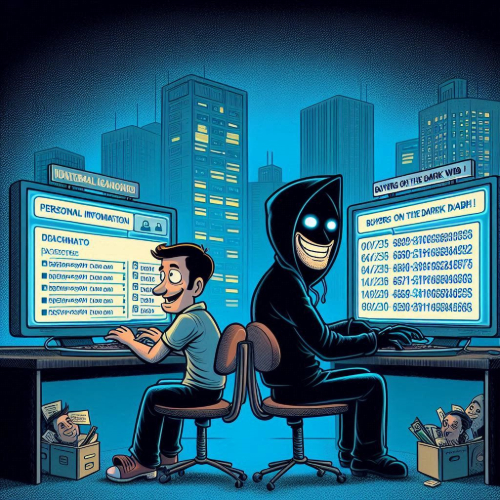
Yet another major social media platform has fallen victim to hackers, leaking a treasure trove of users’ personal data onto the dark web. The breach exposed millions of names, emails, phone numbers, and—most importantly—the embarrassing middle-school-era usernames people thought were long forgotten.
The company’s official statement reads: “We take user privacy very seriously, which is why we require you to hand over every detail about your existence to sign up. Unfortunately, we were compromised due to our state-of-the-art security measures being slightly less effective than a sticky note with a password written on it.”
While the platform has promised to investigate thoroughly, leaked documents suggest internal discussions focused on whether simply rebranding would be easier than fixing their security issues.
Despite users’ outrage, history shows their response will likely be minimal. “I mean, I’m mad,” said longtime user Karen Davidson, whose entire financial and personal history has been traded among cybercriminals. “But I’ve already built my profile with 18 years of carefully curated vacation photos and hot takes—I can’t just start over!”
Meanwhile, industry experts have pointed out the staggering injustice of the data economy. “Right now, social media companies allow you to build your own profile. They gather every detail about your life as you wrote it, sell it for millions, and, if exposed, they might throw you five bucks in a class-action settlement,” said privacy advocate Dr. Tom Stevens. “It’s the only business model where incompetence results in free money—just not for you.”
Enter a bold new startup: “YouBucks”, an innovative trading platform where individuals can cut out the middleman and sell their own personal data directly. Instead of corporations raking in profits from your browsing history, you make the money. Want to sell your location history? Done. That weird crush you’ve been secretly Googling at 2 AM? The price depends on how juicy it is.
A beta tester of YouBucks, Mark Lopez, sold his decade’s worth of online purchases and made enough money to buy back all the useless gadgets he’d originally bought. “Why should corporations make millions while I get nothing?” Lopez declared. “I’ll sell my own data, thank you!”
Despite skepticism, the new platform promises a refreshing change: instead of worrying about getting hacked, users can finally just sell themselves to the highest bidder on their own terms.
Critics warn of ethical concerns, but at this point, let’s be honest—privacy is more of a concept than a reality anyway.
So, next time a massive breach leaks all your data, instead of panicking, maybe ask yourself: why didn’t I make money off this first?
About the Author

 Jaime
Jaime 
 Kelly
Kelly