Bridging the Generation Divide: When Encyclopedias Face Off Against TikTok Tutorials
May 12, 2025
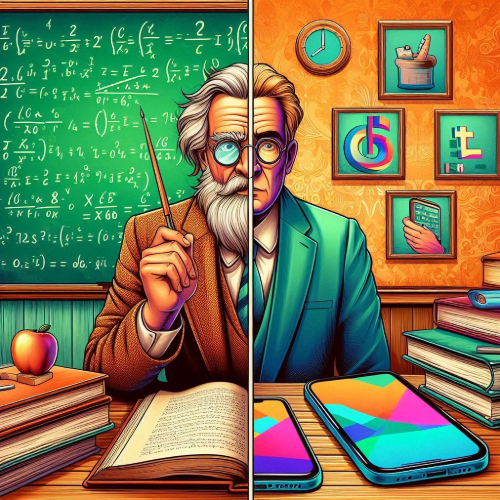
In a world where dusty textbooks and digital screens now share the educational stage, the battle between old-school scholars and new-age learners has reached peak absurdity. On one side, venerable educators, armed with decades-old methods and the comforting scent of paper, stand firm in their belief that true learning happens in the quiet rustle of pages. On the other, digital natives are busy perfecting the art of condensation—teaching whole courses through 60-second viral videos and reaction emojis, because who needs lengthy explanations when a snappy meme can sum it up?
The Ancient Art of Traditional Learning vs. Modern 60-Second Wisdom
Long gone are the days when classroom lectures were punctuated by the sound of chalk on slate. According to defenders of the old ways, learning demanded undivided attention, a steady pen, and a forced smile during long hours of note-taking. Meanwhile, the digital brigade argues that if you can’t decipher the hidden lesson in a trending TikTok dance, you’re clearly missing out on the real deal. Indeed, the irony isn’t lost when centuries-old academic rigor is now being challenged by the art of looping background music and rapid-fire editing.
Hybrid Programs: Because Nothing Says “Effective Learning” Like a Mashup
In a bid to bridge these starkly different worlds, educational institutions have attempted a daring experiment: blending the rigor of yesteryear with the flashiness of today’s tech. Picture a classroom where professors reluctantly dust off their texts while a side-screen streams live reactions from students more interested in perfecting their filter game than engaging in debate. One astute observer commented, “We’re creating a hybrid model where the depth of traditional academia is only matched by the superficial appeal of YouTube tutorials.” It seems that the very concept of learning is evolving—or at least being split-tested for maximum virality.
The Workplace: Where Experience Clashes with ‘Swipe-Right’ Strategies
The generational tug-of-war isn’t confined to lecture halls. In office corridors, veteran employees proudly recount tales of learning through hard-won experience, grumbling about the lost art of face-to-face mentorship. Meanwhile, the newcomers, sipping artisanal lattes while coding on the go, insist that a well-timed swipe or click is all it takes to stay ahead in today’s competitive marketplace. In this era of innovation, intergenerational mentoring sessions have become a quirky spectacle: think of it as a live performance where cautionary tales meet swipe-right strategies in a dance of mutual bewilderment.
Cultural Shifts: From Print and Radio to Streaming and Meme Theory
Our favorite traditional media—once celebrated for their reliability and depth—are now relegated to quaint nostalgia by those who find truth in streaming feeds and endless GIFs. While the older crowd waxes lyrical about the sanctity of a well-researched article and the serendipity of handwritten notes, the new generation scoffs, rallying behind the immediacy and diversity of digital platforms. The result? A cultural tug-of-war where authenticity is redefined, and learning becomes as much about high-speed scrolling as it is about reflective thought.
What’s Next in the Great Educational Experiment?
As the debate between textbook wisdom and TikTok flair rages on, one question remains: will future education be a seamless blend of scholarly tradition and byte-sized brilliance, or will it simply devolve into a never-ending cycle of meme-inspired lectures? The coming days promise more ironic twists, where the lines between in-depth learning and viral content blur until they’re indistinguishable. Perhaps the next breakthrough in education won’t be about which medium is best, but rather about finding a way to make everyone laugh—and learn—at the same time.
If the power grid goes down for 120 days? The generational divide in survival knowledge would become glaringly obvious.
On one side, we have the older generations—masters of handwritten recipes, practical handiwork, and analog thinking. These are the folks who still remember how to start a fire without a smartphone tutorial, cook meals without a microwave, and navigate the world using an actual paper map. They understand food preservation techniques, how to mend clothing, and—most importantly—how to entertain themselves without electricity.
Meanwhile, the younger generations, fluent in the art of Wi-Fi-dependent existence, might find themselves in a moment of crisis. With digital banking down, no online food delivery, and tutorials locked behind lifeless screens, Gen Z and Millennials might suddenly regret not paying attention when their grandparents explained how to change a tire or stockpile emergency supplies. However, they do excel in adaptability, social networking (even offline), and innovative problem-solving, meaning they would likely find ways to repurpose knowledge from their digital lives in creative ways.
Ultimately, the true survivors would likely be those who can bridge both worlds—those who embrace traditional skills while also wielding the modern ingenuity to improvise, barter, and innovate in an electricity-free era. So, if the blackout comes, find yourself a resourceful elder, a creative young innovator, and maybe a sturdy flashlight—you’re going to need them.
Stay tuned as we explore more absurdities in the world of learning, where every new trend challenges the old guard, and each battle of wits becomes a highlight in the ongoing saga of our generation divide.
About the Author


 Daniel L
 Jaime
Jaime