In today’s golden age of information, it may seem like we have endless news choices, a buffet of perspectives ready for consumption. But look a little closer, and you’ll realize—behind the scenes, it’s really just one kitchen, one chef, and one menu of approved emotional responses.
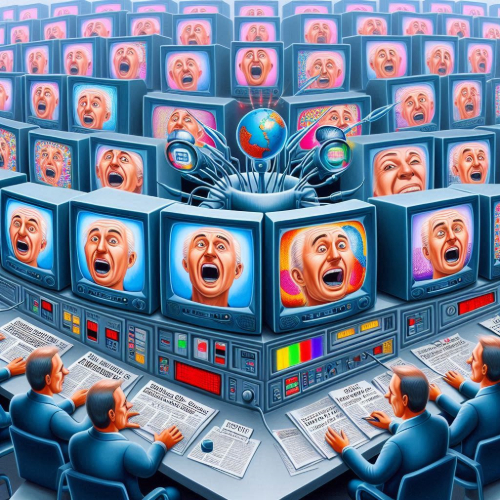
The modern news conglomerate functions less like a marketplace of ideas and more like a finely tuned emotional guidance system, expertly orchestrated by a handful of corporate overlords who own most of the media landscape. With each station under their umbrella, the same viewpoints are carefully repackaged, ensuring the audience gets a uniform, synchronized this is how you should feel directive.
“It’s fascinating,” says media strategist Dr. Echo Chamberly. “We call it ‘controlled resonance.’ When a conglomerate owns multiple stations, they don’t need to convince people to believe something. They just present it on every outlet they own, until it starts feeling like an undeniable fact.”
This phenomenon has given rise to what experts call the “Illusion of Choice,” where consumers believe they are getting varied perspectives—but really, they’re just flipping between different brand names that deliver the same messaging. “It’s not news, it’s an emotional conveyor belt,” says investigative journalist Noelle Repeatswell.
Over the years, media monopolization has transformed headlines into emotional cue cards. Instead of reporting, stations now specialize in prompting: “Be angry now.” “Feel inspired.” “Panic slightly.”
To enhance the illusion, conglomerates maintain various brands with slightly different tones—some offering outrage, some comfort, and others subtle alarm. But despite cosmetic differences, all roads lead to the same conclusions.
As ownership consolidates further, analysts predict a future where news headlines will simply tell audiences their appropriate reaction in real time.
“Forget opinion pieces,” says an anonymous media executive. “We’re moving towards direct emotional tagging. Soon, articles will just come with buttons labeled ‘rage,’ ‘weep,’ or ‘blind obedience.’”
Until then, viewers must navigate the emotional orchestration of today’s media landscape, where true independent thought is left gasping for air—somewhere under the weight of a perfectly manufactured emotional narrative.
Stay tuned. You’ll feel exactly how we want you to about what happens next.
About the Author


 Jaime
 Daniel L