
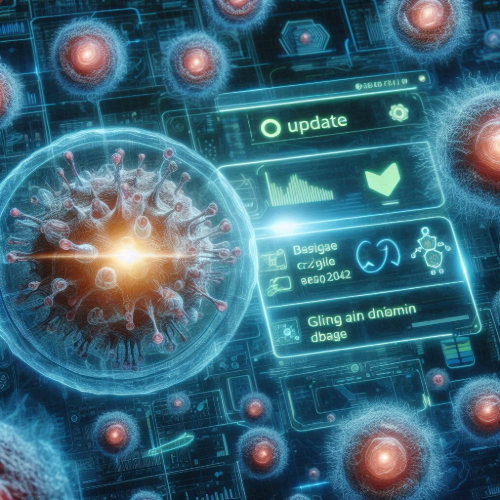
In a groundbreaking—and somewhat bewildering—turn of events, scientists at the Institute of Cellular Innovations (ICI) have unveiled the revolutionary BioOS update—a “software patch” for living, breathing human cells. Promising to fine-tune everything from metabolism to mood, this self-updating system is quickly being hailed as the future of healthcare. With BioOS, your body may soon compare its performance metrics on par with your smartphone, complete with pop-up notifications and a built-in “low battery” alert.
An Operating System for Your Organs
The new BioOS update, slated for a limited beta-launch later this year, claims to reprogram cells in real time. According to lead researcher Dr. Ada Tive—a self-professed “digital health futurist”—the update is as simple as logging into an app. “Imagine a world where you can upgrade your immune system with one click,” Dr. Tive explained. “We’re talking about a quick download that boosts white blood cell defense against not just viruses, but outdated cellular software.” In pre-release trials, beta testers reported enhanced energy levels, improved heart rhythm stability, and even a peculiar side effect: an occasional burst of spontaneous, jazz-inspired dance moves during moments of high stress.
The Benefits (and the Bugs)
Proponents of BioOS boast that the update will transform routine healthcare. Need a metabolism fix? A quick cell patch update will smooth out your fat-burning efficiency. Feeling blue? Built-in mood regulators will automatically adjust neurotransmitter levels to keep you in that “always-on” positive mode. However, as with any new technology, there are unexpected bugs. Some early adopters experienced what many are calling “glitch mode”—a phenomenon where the body’s self-diagnostic interface would unexpectedly display error messages like “Low Energy: Please Recharge,” or even initiate random sleep mode during board meetings. Tech enthusiasts and health pundits are already humorously dubbing these incidents the “Firmware Follies.”
From Smartphones to Stem Cells: A Subscription Model?
In a twist that has both investors and healthcare providers chuckling nervously, speculation is rife that BioOS may soon usher in an era of subscription-based biology. “Just as we aren’t paying once for our smartphone’s operating system, why should our bodies be any different?” mused venture capitalist Byte Cashmore. Under this model, individuals might be required to pay a monthly fee to receive the latest cellular updates—complete with optional add-ons like enhanced vision filters, mood stability packages, or even augmented reflexes. Critics warn that a marketplace for patches could transform the very nature of healthcare, turning our bodies into perpetually upgradable gadgets, prone to unscheduled reboots and compatibility issues with older firmware.
A New Frontier in Regulated Health
Government officials and regulatory agencies have already begun drafting guidelines to manage this brave new world of bio-updates. Policy makers predict that BioOS, with proper controls, could drastically reduce hospital admissions by preemptively fixing genetic “bugs.” Meanwhile, ethical debates rage about whether mandatory updates might infringe on personal autonomy. “Imagine having your body force-updated in the middle of a family dinner,” joked one official. “It might be the most inconvenient reboot since the Y2K scare.” This pragmatic humor masks genuine concern over a future where human biology is maintained by quarterly software updates rather than by careful, deliberate lifestyle choices.
Predicting Tomorrow’s Health Today
Looking to the horizon, experts suggest that BioOS is merely the first step toward a future where biology and technology mesh seamlessly. Upcoming iterations of the update are rumored to include “social status modes” that integrate with personal digital profiles. Picture your body declaring, “Currently under maintenance: please stand by,” during a viral live-stream or automatically adjusting your hormonal levels to match trending wellness challenges. Early adopters are excited by possibilities such as customized genetic playlists and the opportunity to swap “firmware” recommendations via peer reviews on health forums. While many view this as a leap toward perpetual vitality, others worry that the pursuit of the ultimate body update may eventually lead to an impersonal, commercialized future where even our tissues come with a warranty.
What’s Next When Your Cells Virtually “Call It Quits?”
Just as smartphones sometimes encounter fatal errors that only a factory reset can resolve, rumors are swirling about what happens when BioOS meets its inevitable glitches. Some experts jest that imminent updates will include a “panic button”—a failsafe to reverse any catastrophic changes. Others envision an online marketplace where one might trade or rent patches, creating a vibrant economy of biological upgrades and downgrades. While the possibilities seem endless, one thing is clear: the intersection of tech and health is opening new, uncharted pathways, where human evolution is driven not by organic change alone, but by digital intervention as well.
This new health revolution—part science, part satire—challenges us all to consider how far we’re willing to let technology rewrite the code of life. As BioOS readies for launch, citizens are advised to “back up your brain” before installing any updates and to be prepared for some unexpected pop-up messages during important conversations. Whether the system crash of a body’s bio-upgrade is a sign of progress or simply a glitch in the matrix remains to be seen, but one thing is certain: the future of healthcare is as whimsical as it is promising.
Stay tuned as we continue to monitor this bizarre blend of biology and bytes—after all, as one beta tester perfectly summed up, “I just wish my body wouldn’t stream a software update during my wedding vows!”
About the Author

 Jaime
Jaime 
 Kelly
Kelly