BREAKING NEWS: Scientists Discover Shocking Condition Linked to Sleep Deprivation—”Chrono-Chaos Syndrome”
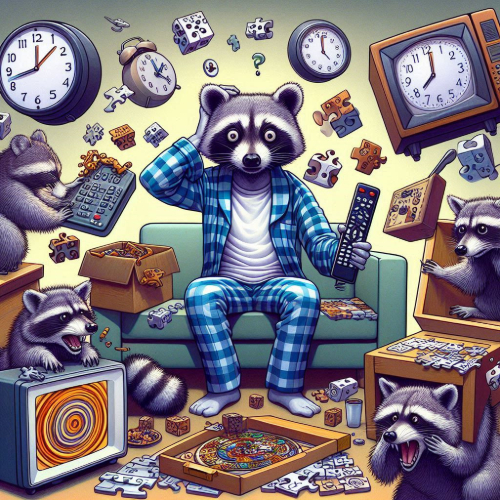
Experts worldwide are sounding the alarm about a newly identified condition, Chrono-Chaos Syndrome (CCS), which appears to be directly linked to staying up way past bedtime to binge-watch obscure documentaries or debate strangers online at 2 a.m.
According to esteemed sleep scientist Dr. Nocturne Dozey, CCS is caused by a reckless disregard for the body’s circadian rhythm. Symptoms include forgetting what day it is, typing nonsensical emails at 3 a.m., inexplicable cravings for breakfast foods at midnight, and extreme emotional distress upon hearing the phrase, “You look tired.”
“People think they can outwit sleep, but the consequences are dire,” warns Dr. Dozey. “We’ve seen cases where individuals attempt to function on only two hours of sleep and end up trying to microwave their TV remotes or wear socks on their hands.”
Society is already feeling the impact. Employers report an uptick in workers who show up in pajamas and insist it’s “Friday, probably.” Social gatherings are becoming increasingly awkward, as CCS sufferers struggle to recall basic conversation topics beyond “Dreams are weird” and “I think my eyelids are rebelling.”
Governments are scrambling to address this crisis. Some nations have proposed laws requiring mandatory bedtime notifications on all electronic devices. Others advocate for “Nap Zones” in public spaces, where exhausted individuals can recover from their ill-advised decisions.
But perhaps the most harrowing effect of CCS is the complete collapse of logic when attempting to set an alarm. “People with CCS say, ‘I’ll get up at 6 a.m.’—and then proceed to stay awake until 4 a.m.,” laments Dr. Dozey. “It’s an endless cycle of self-sabotage.”
The cure? Experts suggest something radical—going to sleep on time. However, skeptics argue that such an approach contradicts their personal philosophy of “Why sleep when I could watch videos of raccoons solving puzzles?”
Will humanity defeat Chrono-Chaos Syndrome? Or will we forever be trapped in an endless loop of regretting our decisions every morning? Stay tuned—right after this late-night infomercial about a pillow that “changes lives.”
About the Author

 Daniel L
 Kelly
Kelly