
Breaking News: Competitive Napping Now the Universe’s Premier Sport—Intergalactic Leagues Form!
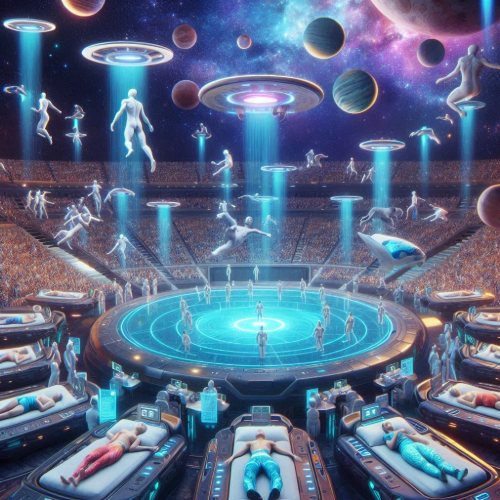
The United Federation of Professional Nappers has once again made history, successfully lobbying for Competitive Napping to be recognized as the ultimate athletic pursuit in the year 3125. No longer confined to Earth, the sport has expanded into intergalactic competition, with lunar colonies, orbital stations, and even the Martian Republic fielding elite teams.
After centuries of refinement, Competitive Napping now features advanced divisions, including Zero-Gravity Dozing, where athletes must maintain stable sleep cycles despite floating unpredictably in deep space, AI-Assisted Lucid Dreaming, which requires participants to navigate virtual dreamscapes without waking up, and the hyper-intense Crisis Nap, where competitors must fall asleep despite simulated asteroid impacts and planetary evacuations.
The reigning champion, Xylo-Torq 9000, an advanced AI-human hybrid from the Andromeda Cluster, has maintained dominance by achieving REM sleep in under 4.2 seconds. When asked for comment, Xylo-Torq simply emitted a low-frequency hum—believed to be the universal signal for “Already asleep.”
However, controversy has emerged surrounding NeuroBoost Injections, which allow competitors to instantly enter deep sleep states. The Galactic Anti-Doping Authority is investigating whether such enhancements violate the spirit of pure napping competition. Meanwhile, planetary leagues are debating whether gravity-free sleeping pods should be mandatory or if traditional napping—on couches, hammocks, and lecture halls—should remain the gold standard.
As humanity and its extraterrestrial neighbors prepare for the first Galactic Napping Olympics, the stakes have never been higher—or sleepier. Experts predict that species with natural hibernation abilities, including certain reptilian entities from the Tau Ceti system, will have an unfair advantage.
One thing is certain: history is being made. And then promptly slept on.
About the Author

 Daniel L



 Kelly
Kelly