BREAKING: Gas Prices Rise Again, Economists Blame “Math, Oil, and Probably You” — A Deep Dive Into the Barrel of Chaos
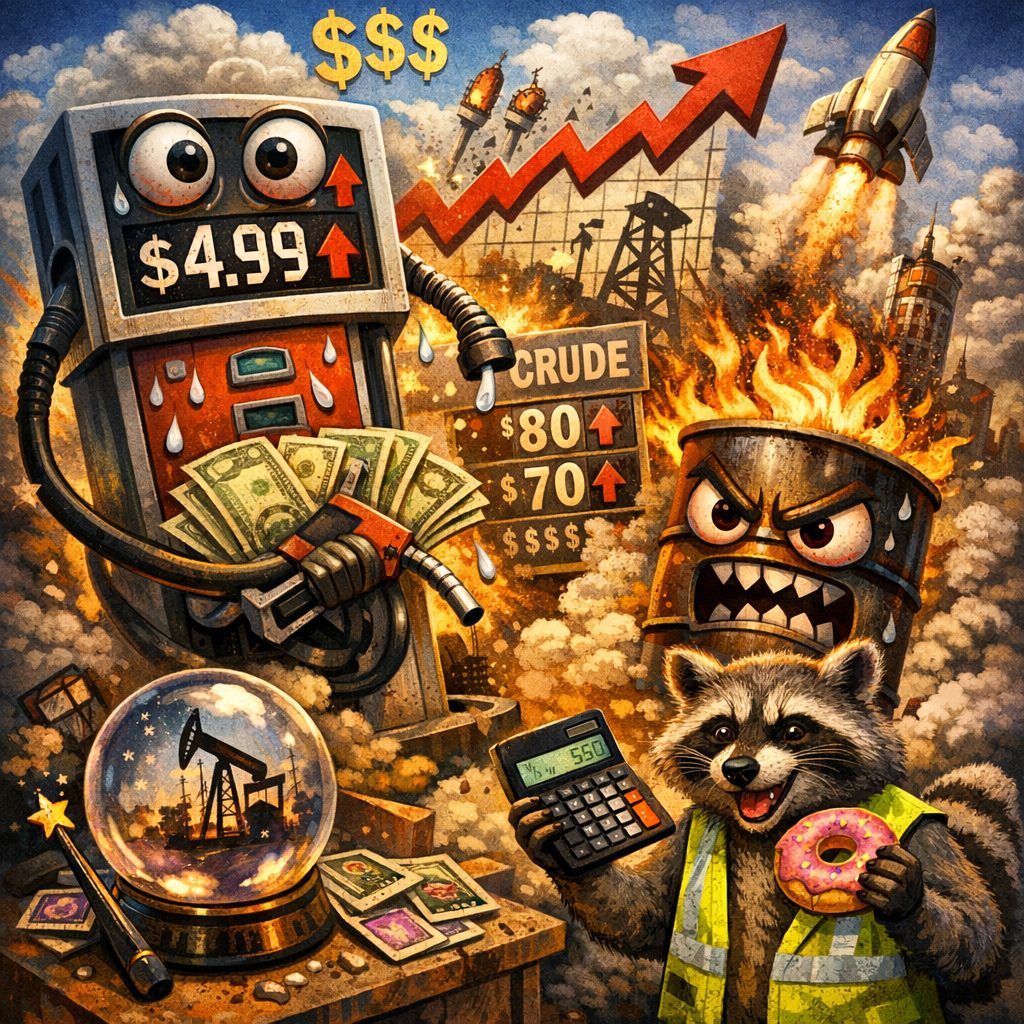
Gas prices are up again, which means Americans are once again asking the nation’s most important question: “Why does filling my tank cost more than my first car?”
Today, we investigate the truth — the real truth — behind how gas prices are set, why they rise, and why the number on the pump seems to increase every time you blink, sneeze, or think about driving somewhere slightly fun.
This is a nerdy, factual, satire‑infused breakdown of the global petroleum circus. Buckle up. Or don’t. Seatbelts are optional in satire.
How Gas Prices Are Actually Set (The Real, Boring, Surprisingly Logical Version)
Gas prices come from four main ingredients:
- Crude Oil Prices The cost of a barrel of crude oil — the raw dinosaur juice — is the biggest factor. When crude goes up, gas goes up. When crude goes down, gas sometimes still goes up because the universe is cruel and mysterious.
- Refining Costs Turning crude oil into gasoline requires massive refineries, expensive equipment, and at least one guy named “Rick” who always says things like, “Yeah, she’s running hot today.”
- Distribution & Marketing This includes pipelines, trucks, storage, and the cost of printing those little signs that say “We’re Out of Regular, Try Premium.”
- Taxes Federal + state taxes = the government’s version of a tip jar.
These four pieces combine into the price you see at the pump. No conspiracy. No shadowy cabal. Just economics, infrastructure, and the eternal suffering of the average commuter.
So Why Did Prices Go Up Recently?
Here’s the factual, nerd‑approved breakdown:
1. Crude Oil Prices Jumped
Global crude prices fluctuate based on supply, demand, production decisions, and the occasional international “oopsie.” When crude rises even a little, gas stations react like your friend who hears one rumor about avocado shortages and buys 40 of them.
2. Refinery Maintenance Season
Every year, refineries shut down parts of their operations for maintenance. This is normal. This is planned. This is also the exact moment when gas prices decide to cosplay as SpaceX rockets.
3. Seasonal Gas Blend Switch
Summer gasoline requires a different blend to reduce emissions. It’s more expensive to produce. It’s also more expensive because the universe enjoys seasonal suffering.
4. Supply Chain & Inventory Lag
Gas stations buy fuel in batches. If they bought expensive fuel last week, they charge expensive prices this week. This is called “business,” but it feels like “emotional damage.”
5. Market Speculation
Traders buy and sell oil futures based on predictions. Sometimes those predictions are based on data. Sometimes they’re based on vibes, astrology, or a seagull landing on the wrong buoy.
A Nerdy Barrel Breakdown (Because You Asked for Depth)
A barrel of crude oil is 42 gallons, but only 19–20 gallons become gasoline. The rest becomes:
- Jet fuel
- Diesel
- Asphalt
- Plastics
- That weird smell inside every Home Depot
- And probably at least one ingredient in Mountain Dew
When crude oil goes from $70 to $80 per barrel, that $10 increase translates to roughly 25–35 cents more per gallon at the pump.
That’s the math. Not fun math. Not sexy math. But math nonetheless.
But Why Does One Station Charge $3.29 and the One Across the Street Charges $4.19?
Because gas stations are like siblings:
- One is responsible and reasonable.
- The other is chaotic, unpredictable, and somehow always asking for money.
Stations set prices based on:
- Their wholesale cost
- Their competition
- Their location
- Their desire to buy a new boat
- Whether the owner woke up in a good mood
- Whether the owner woke up at all
Some stations make most of their profit from gas. Others make it from snacks, drinks, and the $7.99 “emergency phone charger” that breaks before you reach your car.
⛽ Advice & Fuel Strategy (Because Knowledge Is Power… and Gas Is Expensive)
When to Fill Up
- Early Week Advantage: Historically, gas prices tend to rise mid‑week (Wednesday–Friday) as stations adjust for weekend demand. Monday or Tuesday mornings are your best shot at catching lower prices before the “Friday Panic Surge.”
- Avoid Holiday Weekends: Prices spike faster than your cousin’s grill flames on Memorial Day. Fill up early in the week before the road‑trip rush.
- Watch Crude Trends: If crude oil futures dip below $80 per barrel, retail prices usually follow within 7–10 days. Nerdy? Yes. Effective? Also yes.
About That “Cheaper Gas”
Some stations are rolling out E15 blends — gasoline with 15% ethanol instead of the usual 10%.
- Pros: Often 10–15¢ cheaper per gallon.
- Cons: Ethanol burns faster and can slightly reduce mileage (think “discount gas that disappears quicker than your paycheck”).
- Reality Check: It’s fine for most modern cars, but older engines may grumble like retirees at a self‑checkout kiosk.
The Dirt in a Bottle Satire Section (Where Things Get Weird)
Our investigative team uncovered several totally real reasons gas prices rise:
- A refinery worker accidentally leaned on the “price up” lever while reaching for a donut.
- Oil traders misread a chart because someone spilled Monster Energy on the keyboard.
- A barrel of crude oil rolled away from a storage yard and is still at large.
- A gas station manager raised prices after losing a heated argument with a raccoon behind the dumpster.
- Someone whispered “road trip season,” and the market panicked.
- A single butterfly flapped its wings in Texas, causing a 12‑cent increase in Nevada.
We also found a leaked memo from the “Council of Gas Station Snack Pricing,” which reads:
“Raise gas prices so people come inside to buy Slim Jims. They always buy Slim Jims.”
We cannot confirm the authenticity of this memo, but it feels spiritually accurate.
If you see a raccoon in a reflective vest holding a calculator near the pump, buy gas immediately — that’s the universe’s signal prices are about to rise.
So What’s the Real Takeaway?
Gas prices rise because of:
- Global crude oil markets
- Refining capacity
- Seasonal blends
- Supply chain timing
- Market speculation
- And the eternal chaos of economics
No villains. No secret societies. Just a complicated system that reacts to everything from global events to refinery schedules to the emotional stability of the commodities market.
And also maybe raccoons. We’re still investigating.
About the Author


 Jaime
Jaime 
 Daniel L