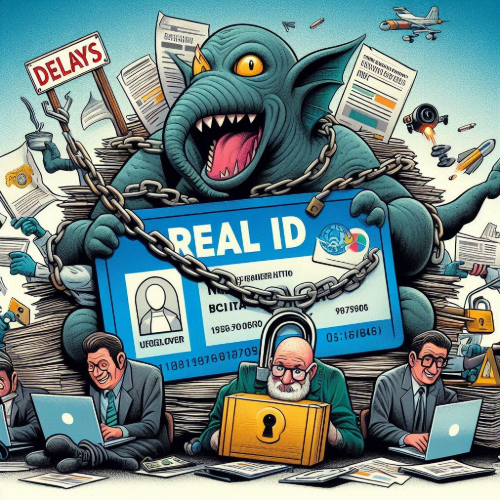
In a stunning act of governmental efficiency, the Real ID initiative is finally delivering on its promise: making travel just inconvenient enough that citizens feel simultaneously safer and absolutely terrified. With its bold new push toward digitized security measures, Real ID is proving that personal data protection is less of a priority and more of a theoretical concept.
Welcome to the Future—Where Your Identity Is Only a Breach Away!
For decades, Americans enjoyed the thrill of getting through airport security with nothing more than an old driver’s license, some vague notion of personal responsibility, and the unspoken agreement that no one really cared about the authenticity of their identity. But thanks to Real ID, travelers now have the privilege of handing over even more sensitive personal data to yet another centralized system—because, honestly, who isn’t a fan of keeping everything neatly stored for cybercriminals to enjoy at their leisure?
Biometrics: Because Losing Your Password Wasn’t Stressful Enough
As if government databases weren’t already tempting enough for hackers, Real ID takes things up a notch by incorporating biometric data and facial recognition technology—ensuring that the only thing standing between you and identity theft is, well…your own face.
Security officials insist this is the most advanced form of verification available, promising that the system can accurately identify travelers using intricate facial mapping technology—unless, of course, you happen to age, change your hairstyle, wear sunglasses, or exist in slightly poor lighting. In such cases, the machines may struggle slightly and decide you don’t exist.
“This is a revolutionary way to streamline travel,” says TSA spokesperson Gary Encryptson, while testing the software by making exaggerated facial expressions to see how quickly he can break it. “Gone are the days of fumbling for boarding passes and IDs—we now have the power to simply scan your face and let the database confirm that you are, indeed, still you…assuming it recognizes you at all.”
A Project 20 Years in the Making—Because Bureaucracy Moves at the Speed of Glaciers
Real ID was originally proposed way back in the distant past—2005. Yes, a time when people were still excited about flip phones, MySpace was cutting-edge, and the idea of nationwide identity verification sounded reassuring instead of dystopian. However, in true government fashion, the rollout has been pushed back year after year, tangled in a delightful mess of state resistance, public confusion, and officials repeatedly realizing they might need to fund this thing.
“Look, these things take time,” says an anonymous bureaucrat currently buried under a mountain of unfinished paperwork. “First, we had to argue with every state that didn’t want to play along, then we forgot to budget for it, and then—well, frankly, no one could agree on what a Real ID even was for like a decade.”
While officials insist Real ID is now finally happening (probably, maybe, possibly), skeptics are understandably hesitant to believe that a project delayed for over two decades will suddenly be implemented without another last-minute extension in the name of “making sure states are ready” (translation: no one actually finished setting up the systems yet).
Experts Agree: Your Data Has Never Been More Accessible!
“This is an exciting new era for American travelers,” says data security analyst Dave McHackerson, whose job mainly consists of explaining to people that their information has already been stolen three times this year. “Real ID is an incredibly convenient way for us to add ourselves to yet another government-maintained database, which, historically speaking, means we’ll be receiving cheerful updates about data breaches approximately every six months.”
For those worried about privacy, officials reassure that the system is absolutely airtight—just like the last five security measures that somehow left half the population wondering why their bank account suddenly contained $0.74 and a mysterious charge for exotic fish.
Real ID—Because You Didn’t Need That Identity Anyway
While some citizens may feel uneasy about handing over their biometric data, officials urge them to consider the benefits. “With Real ID, people can travel with confidence knowing that their personal details are safely stored in a way that can only be accessed by highly trained government professionals and, you know, anyone with half-decent hacking skills,” Encryptson adds.
Meanwhile, travelers are preparing themselves for the inevitable: signing up for yet another identity theft protection service to deal with the fallout.
Stay tuned for updates on the latest government-sponsored digital vault—now featuring double encryption for an extra five minutes of security.
About the Author

 Jaime
Jaime 
 Kelly
Kelly