
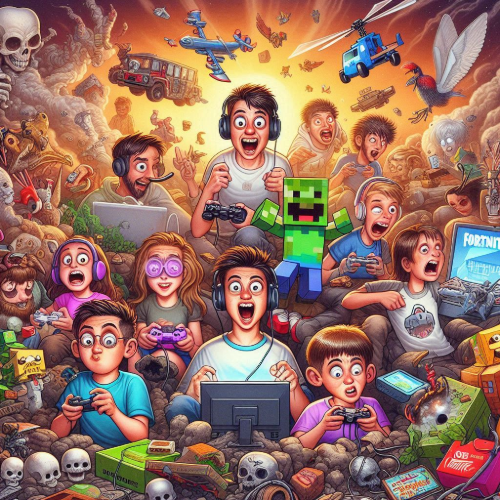
Ah, online gaming—a never-ending, all-consuming digital black hole that sucks in kids and adults alike, leaving them bleary-eyed and questioning their life choices. While some may argue that gaming fosters social interaction and creative thinking, others would say it’s just a fancy way to avoid actual responsibilities.
What Are Kids Playing? And Why?
Today’s youngsters are hooked on games that range from digital LEGO-building simulators to virtual societies where they can buy overpriced clothes for their avatars while living in their parents’ basement. Here are some of the biggest culprits:
- Minecraft – A game where kids and adults alike spend hours punching trees, constructing houses they’ll never afford in real life, and avoiding terrifying pixelated creatures.
- Roblox – A game that lets players create worlds, but also mysteriously drains bank accounts thanks to microtransactions. Because who doesn’t want their avatar dressed in a $20 pair of pixelated sneakers?
- Fortnite – A battle royale extravaganza where tweens and teens mercilessly destroy their opponents while communicating through questionable dance moves.
- League of Legends – A virtual gladiator arena where players scream at their screens and blame their teammates for every misstep.
Why are kids playing these games? Simple—because reality isn’t as exciting. The appeal of limitless creativity, competition, and mindless entertainment beats dealing with homework and household chores.
The Adults Aren’t Any Better
Let’s be honest—adults aren’t immune to the addictive pull of online gaming. In fact, some might argue they’ve got it worse. While kids get yelled at to go to bed, grown-ups are free to lose sleep over whether their RPG character has the correct sword enchantments.
Some of the most notorious time-sinks among adults include:
- World of Warcraft – The OG of online role-playing games, where players spend thousands of hours grinding quests instead of their actual work deadlines.
- Call of Duty – A franchise dedicated to proving that adults are just as bad at teamwork as children. Expect plenty of yelling and accusations about “horrible aim.”
- Elden Ring – A game that is equal parts rage-inducing and addictively satisfying, where players learn that pain is inevitable but victory is sweet.
- Counter-Strike: Global Offensive – Where players either feel invincible or question every choice they’ve ever made.
Why do adults play? Stress relief, escape, competition—or maybe just the realization that virtual worlds are more forgiving than the real one.
What Needs to Improve?
While gaming can be a great pastime, some undeniable issues need addressing:
- Addiction Prevention – Gamers might say, “I can quit anytime!” But when they’ve skipped meals and ignored real-life responsibilities, maybe it’s time to reconsider.
- Spending Limits – Nothing screams financial regret like spending hundreds on in-game cosmetics that have no actual use outside of impressing strangers online.
- Toxic Communities – The amount of verbal abuse in online gaming could rival a courtroom drama. Would it hurt developers to implement decent moderation systems?
- Work-Life Balance – Just a friendly reminder: pixels won’t pay the bills. Gaming is fun, but maybe don’t forget about, you know, actual obligations.
In the end, online gaming isn’t going anywhere. As long as reality remains frustrating and tedious, people will continue escaping into fantasy worlds where they’re sword-wielding heroes or digital fashion moguls. The trick is keeping things balanced—because while games might be entertaining, they aren’t a valid excuse for ghosting your responsibilities.
So, what’s your take? Is gaming a savior, a distraction, or just a necessary evil of modern life?
About the Author


 Daniel L


 Kelly
Kelly