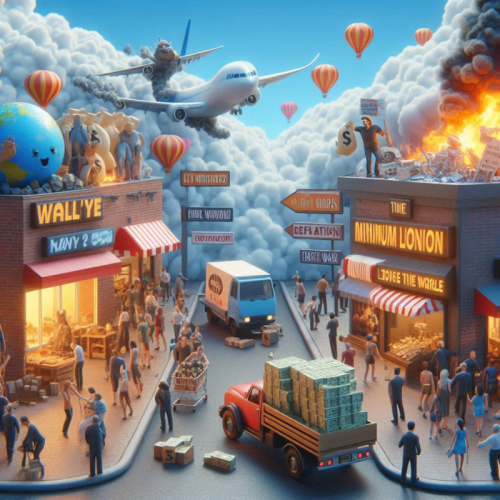
When states across the nation dared to hike “minimum wages”, the intention was noble—helping hardworking citizens achieve a “livable income”. Take a ride with me on this craziness. Little did they know, these financial boosts would trigger an unstoppable domino effect, plunging the economy into deflationary madness and a world of tariffs. Buckle up, folks, because this is a tale of economic absurdity that could only happen in the world of satire.
It all started when workers earning minimum wage found themselves in possession of…more money. Some skeptics warned, “How dare you hand out an extra $5 per hour! That’s enough for one and a half overpriced lattes!” But politicians ignored the warnings and pushed forward. Suddenly, everyday Americans began spending more. Local restaurants reported record sales of avocado toast and artisanal pickles. The spike in spending caused companies to see booming profits, which, ironically, led them to lower prices to attract even more customers. And so, the great deflation spiral began.
As prices dropped to jaw-dropping lows—McDonald’s fries going for 25 cents, folks—the demand for luxury goods soared. Working-class Americans were now able to afford private jets. Who could have predicted? But that was just the beginning. Foreign economies, inspired by America’s deflation-fueled spending spree, started slashing their prices too. Before long, Italian leather bags were cheaper than grocery store tote bags. French champagne cost less than tap water. Global luxury goods flooded the market.
American companies had no choice but to act. “We’ll slap tariffs on this foreign nonsense!” announced a coalition of CEOs after a seven-course lunch of sushi flown in from Tokyo. Soon enough, the Tariff Wars began. Countries retaliated by slapping tariffs on American exports like corn, cars, and good ol’ barbecue sauce. Diplomats argued feverishly over whether a Kansas barbecue rub could be taxed at 3% or 5%. Tensions escalated further when Canada imposed a 50% duty on imported cowboy hats, calling it “a symbol of economic dominance.”
Amid the chaos, one brave economist stepped forward. “This isn’t deflation or tariffs—it’s just good old-fashioned economic absurdity!” he proclaimed before being shushed by a Wall Street executive.
In the end, the nation faced a question: should states roll back minimum wage increases to stop the madness? Or was it worth embracing a world where a middle-class accountant could moonlight as a yacht owner? The jury’s still out, but one thing’s clear: the road to $15 an hour was paved with the most ridiculous intentions.
About the Author

 Daniel L
 Jaime
Jaime