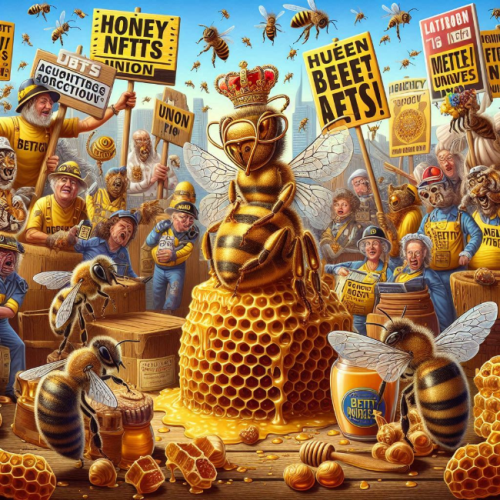
In a bustling hive led by the visionary Queen Beatrix, a decree was issued: “Honey shall symbolize the power and brilliance of bee-women everywhere!” The queen sought to celebrate the strength and contributions of every female bee in Buzzington, from the tireless workers to the sagacious nurses. “We are more than just a hive,” she declared. “We are a sisterhood!”
At first, the idea buzzed beautifully through the hive. Worker bees gleamed with pride as they juggled roles of caregivers, pollinators, and honey-makers. They shared their wisdom in community circles and exchanged empowering stories of resilience, triumph, and camaraderie. Buzzington became a beacon for hives near and far, admired for its unity and celebration of bee-womanhood.
But it wasn’t long before the cracks in the honeycomb appeared. Some bees wondered why the value of their contributions was measured in honey at all. “Is our worth defined by what we produce?” asked one particularly thoughtful bee named Bella. “Why not celebrate our artful waggle dances, our unparalleled navigation skills, and the joy we bring just by being?”
Bella’s question sparked a buzz of introspection across the hive. Bees began to realize that their identities couldn’t be contained in jars of honey—or any single pursuit, for that matter. They weren’t just workers; they were dreamers, thinkers, innovators, and leaders. Soon, the hive’s collective mission shifted. Honey was still important, but it was no longer the sole measure of their success or value.
Instead, Buzzington became a place of balance, creativity, and mutual support. The bees honored every contribution—big or small—and celebrated the richness of their multifaceted lives. The sisterhood thrived, proving that a hive is strongest when its bees can simply be themselves.
Moral of the story? Women, like bees, are at their best when they can thrive in their own unique ways—not just when measured by their output.
About the Author


 Daniel L
 Kelly
Kelly